Source Carbon Steel Tricycle Rear Axle for ATV, Golf Cart, Rickshaw
Find and compare 27 carbon steel tricycle rear axle options for ATVs, golf carts, and motorized tricycles. Review specifications including drum and disc brake systems, power ratings, and customization availability to select the right component for your vehicle assembly needs.
Key considerations
Products List


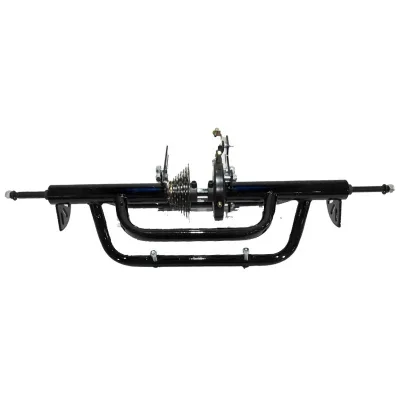


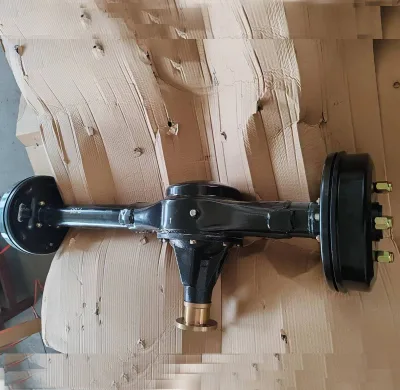

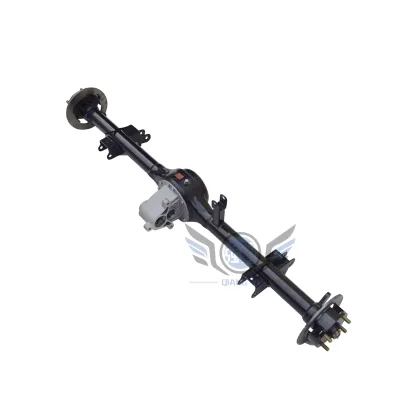


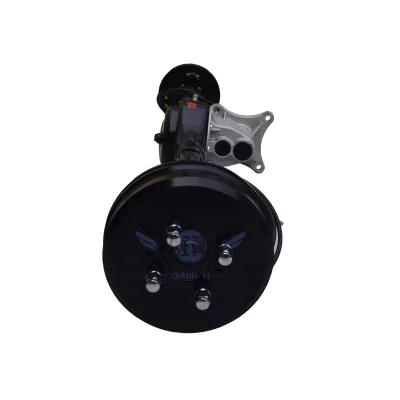
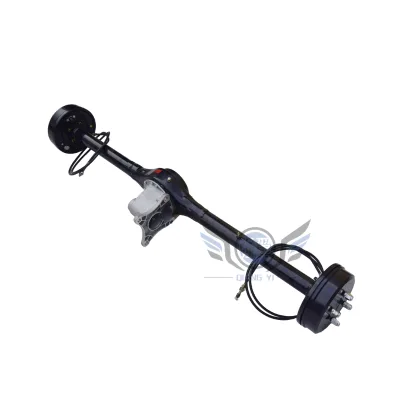
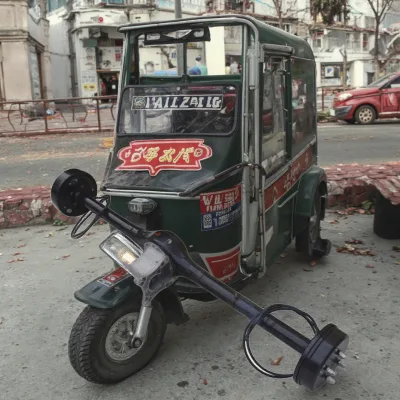
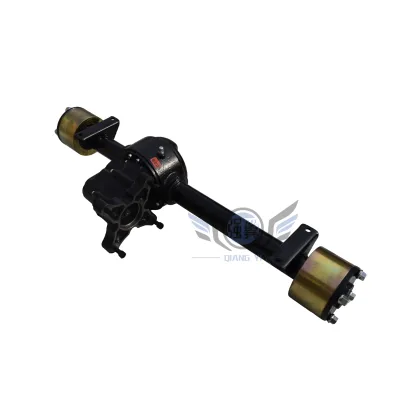
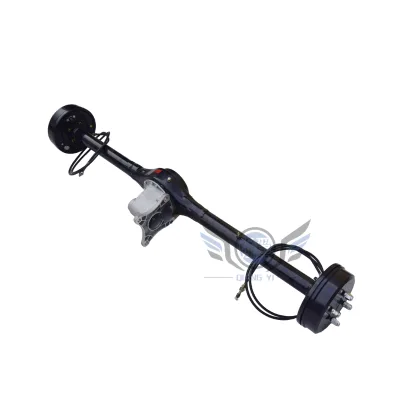
Comprehensive Sourcing Guide
Carbon Steel Tricycle Rear Axle Sourcing Guide
The carbon steel tricycle rear axle serves as a critical structural component for three-wheeled electric vehicles, motorized tricycles, and utility carts, providing the necessary rigidity to support heavy loads while maintaining steering stability. Sourcing this component requires a clear understanding of the specific operational environment, as the axle must withstand varying torque loads and road conditions typical of agricultural, industrial, and recreational applications. Buyers should prioritize suppliers who demonstrate experience in manufacturing axles for diverse vehicle types, including ATVs, golf carts, and auto rickshaws, ensuring the product fits the intended mechanical architecture without requiring extensive modification.
Procurement decisions for this category hinge on the balance between material strength and weight efficiency, as the core material is typically steel or iron, with specific grades influencing durability and corrosion resistance. The market offers a range of configurations, from integrated shift rear axles to one-piece designs, each catering to different assembly requirements and vehicle dynamics. Buyers must evaluate whether the supplier can accommodate custom dimensions and standardization needs, as the observed product listings indicate a high degree of customization in length, diameter, and brake system integration, which directly impacts the final vehicle's performance and safety profile.
Product Scope and Observed Listing Signals
The observed product listings reveal a diverse range of rear axle configurations, including specific models such as the 130mm integrated shift rear axle, 130mm rear axle, and 160mm rear axle, alongside generic one-piece designs. These variations often correlate with the diameter of the pipe, which ranges from 130mm to 180mm, and the length, which can be customized or selected from standard options like 33, 35, or 42 inches. Buyers should carefully map these physical dimensions to their vehicle's chassis specifications, as the distance inside the brake disc and the overall length are critical for proper fitment and brake alignment.
Color and finish options are frequently available, with listings showing black, blue, yellow, white, and red finishes, though the primary material remains steel or iron. The condition of the products is consistently listed as new, and customization services are widely available to meet specific OEM requirements. When evaluating listings, buyers should note that while some products specify a weight of 8kg or 20kg, others provide standard dimensions like 62cm or 78cm, indicating that weight and size are not uniform across all suppliers. This variability necessitates a detailed review of the product specifications to ensure the selected axle meets the load-bearing and spatial constraints of the target vehicle.
Technical Specifications to Verify
Technical verification must begin with the brake system compatibility, as the rear axles are designed to accommodate either disc brakes, drum brakes, or a combination of both. The specifications indicate a distance inside the brake disc that is often customized, and the diameter of the drum braking system ranges from 2.75mm to 3.5mm, which must align precisely with the vehicle's braking mechanism. Buyers should request detailed drawings or CAD files to confirm the exact mounting points and clearance dimensions, ensuring that the selected axle will not interfere with the brake calipers or drum assemblies during operation.
Power and speed ratio requirements are also critical technical parameters, with observed listings suggesting compatibility with motors ranging from 350W to 800W and speed ratios such as 1:8.5, 1:8.0, and 1:6.5. The thickness of the pipe is noted to be above 60mm in some specifications, which directly influences the axle's ability to transmit torque without deformation. Buyers must verify that the material thickness and diameter correspond to the expected power output of the motor, as an undersized axle could lead to premature failure under high-load conditions. Additionally, the model number, such as OEM-RA001 or QSD-rear axle, should be cross-referenced with the vehicle manufacturer's requirements to ensure compatibility.
Compliance and Safety Documentation
Compliance documentation is a non-negotiable aspect of sourcing carbon steel rear axles, with ISO certification appearing frequently across supplier listings, including ISO 9001 and GB/T19001-2016 standards. These certifications indicate that the manufacturer has established quality management systems, which is essential for ensuring consistent product quality and traceability. Buyers should request valid certification copies and verify their scope to confirm that the specific production lines for rear axles are covered, rather than relying on general company certifications that may not apply to the component in question.
Safety standards and regional certifications, such as CE and CCC, are also relevant depending on the target market for the finished vehicle. While some listings mention CE certification, the reliability of these claims should be validated through third-party testing reports or official certification bodies. For vehicles intended for commercial use or public roads, compliance with local safety regulations is paramount, and the supplier must provide evidence that their axles meet the necessary structural and safety requirements. Buyers should also inquire about the testing protocols used to validate the axle's load capacity and fatigue resistance, ensuring that the product has been rigorously evaluated before reaching the market.
Cost Drivers and Commercial Terms
Cost drivers for carbon steel rear axles are primarily influenced by the material grade, customization level, and the complexity of the manufacturing process. The observed price range spans from $0.12 to $500, reflecting the vast difference between basic standard models and highly customized, heavy-duty units. Buyers should understand that the price is not solely a function of weight but also includes the cost of machining, heat treatment, and surface finishing, which can vary significantly based on the specific requirements of the order. Customization of length, diameter, and brake system integration will inevitably increase the unit cost compared to off-the-shelf standard models.
Commercial terms, including Minimum Order Quantity (MOQ) and lead times, are critical factors in the procurement strategy, with observed MOQs ranging from 1 to 1000 pieces. Some suppliers offer an MOQ of 100 pieces, while others may have lower thresholds, allowing for smaller initial orders to test the product. Buyers should negotiate terms that align with their production schedule and inventory strategy, considering that lead times and shipping costs can be affected by the origin of the product, which is often listed as Jiangsu or Zhejiang in China. Understanding the total landed cost, including packaging and freight, is essential for accurate budgeting and pricing of the final vehicle.
Supplier Qualification and Quality Control
Supplier qualification should focus on the manufacturer's ability to maintain consistent quality control throughout the production process, as evidenced by their adherence to ISO standards and internal quality assurance protocols. Buyers should assess the supplier's production capacity and their track record in delivering high-quality rear axles for similar applications, such as motorized tricycles and electric vehicles. The presence of certifications like ISO 9001 and CCC suggests a commitment to quality, but buyers must verify these claims through on-site audits or third-party inspections to ensure that the supplier's actual practices match their stated standards.
Quality control measures should include rigorous testing of the raw materials, such as steel and iron, to verify their composition and mechanical properties. Buyers should request sample testing reports that cover tensile strength, hardness, and dimensional accuracy, ensuring that the axles meet the specified technical requirements. The packaging method, whether blanket or carton, also plays a role in protecting the product during transit, and buyers should confirm that the packaging is sufficient to prevent damage. Establishing a clear quality agreement with the supplier, including acceptance criteria and rejection protocols, is essential for maintaining product integrity and minimizing the risk of defects in the final assembly.
Long-Term Procurement Checks
Long-term procurement success depends on establishing a robust relationship with suppliers who can provide consistent quality and support over time. Buyers should implement a system for regular performance reviews, tracking metrics such as defect rates, delivery timeliness, and responsiveness to quality issues. This proactive approach helps identify potential problems early and allows for corrective actions before they impact production schedules. Maintaining open communication channels with the supplier ensures that any changes in product specifications or manufacturing processes are communicated promptly, reducing the risk of supply chain disruptions.
Continuous improvement and adaptation to market changes are also vital for long-term procurement strategies. As vehicle designs evolve and new regulations are introduced, the rear axle specifications may need to be updated to remain compliant and competitive. Buyers should work with suppliers who are willing to collaborate on product development and innovation, ensuring that the axles remain compatible with future vehicle models. Regular audits and feedback loops help maintain high standards and foster a partnership that supports the long-term growth and stability of the procurement operation.
FAQs
What certifications do carbon steel tricycle rear axles typically have?
Most carbon steel tricycle rear axles carry ISO, CE, and CCC certifications. These standards ensure compliance with international quality and safety requirements. Some models also meet specific national standards like GB/T19001-2016. Buyers should verify the exact certification list for their target market before ordering to ensure regulatory acceptance.
Can I customize the length of a carbon steel tricycle rear axle?
Yes, customization is available for the length of carbon steel tricycle rear axles. Standard options include 33-inch, 35-inch, and 42-inch lengths, but custom sizes can be requested. The distance inside the brake disc is also customizable. This flexibility allows for precise fitting into various tricycle and ATV chassis designs.
What brake systems are compatible with these rear axles?
These rear axles support multiple brake systems, including drum brakes and disc brakes. Specific models feature drum braking with a drum diameter of 2.75-3.5mm. Some variants also integrate ISC brake systems. Buyers can select the braking configuration that best matches their vehicle's performance and safety requirements.
What is the typical MOQ for ordering carbon steel tricycle rear axles?
The minimum order quantity varies by supplier, ranging from 1 to 1000 pieces. Some manufacturers set a standard MOQ of 100 pieces. Buyers should check specific supplier listings for exact MOQ requirements. Lower MOQs are often available for sample orders or customized specifications, while bulk discounts may apply for larger volumes.
Where are carbon steel tricycle rear axles primarily manufactured?
These axles are primarily manufactured in China, with key production hubs in Jiangsu and Zhejiang provinces. Suppliers in these regions offer a wide range of models, including 130mm and 160mm integrated shift rear axles. The concentration of manufacturing in these areas supports efficient supply chains and competitive pricing for global buyers.
What power ratings are associated with these rear axles?
Carbon steel tricycle rear axles are designed for motors with power ratings between 350W and 800W. This range suits various applications, including golf carts, motorized tricycles, and ATVs. The axle construction ensures durability under these power loads. Buyers should match the axle specification to their motor's output for optimal performance and longevity.